
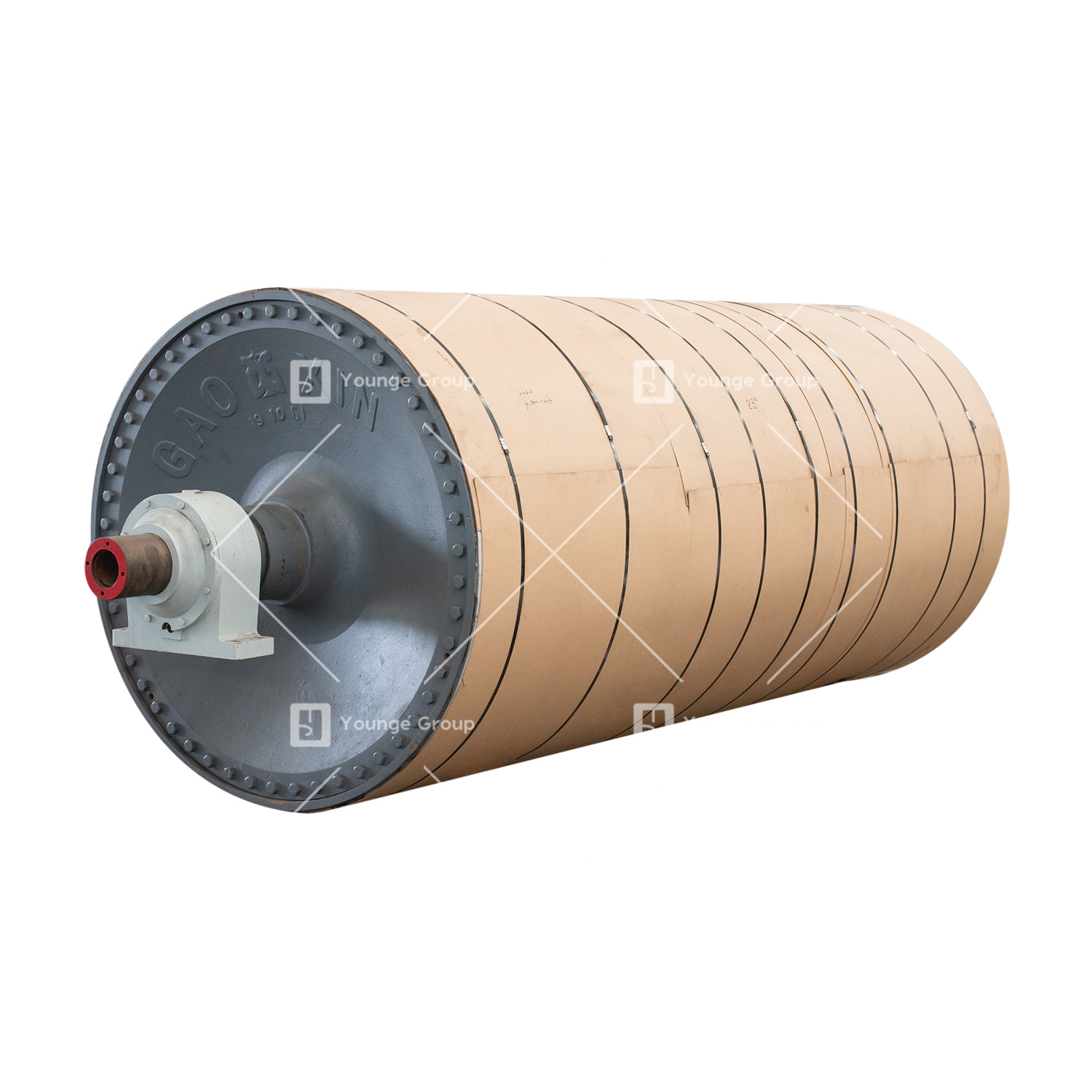

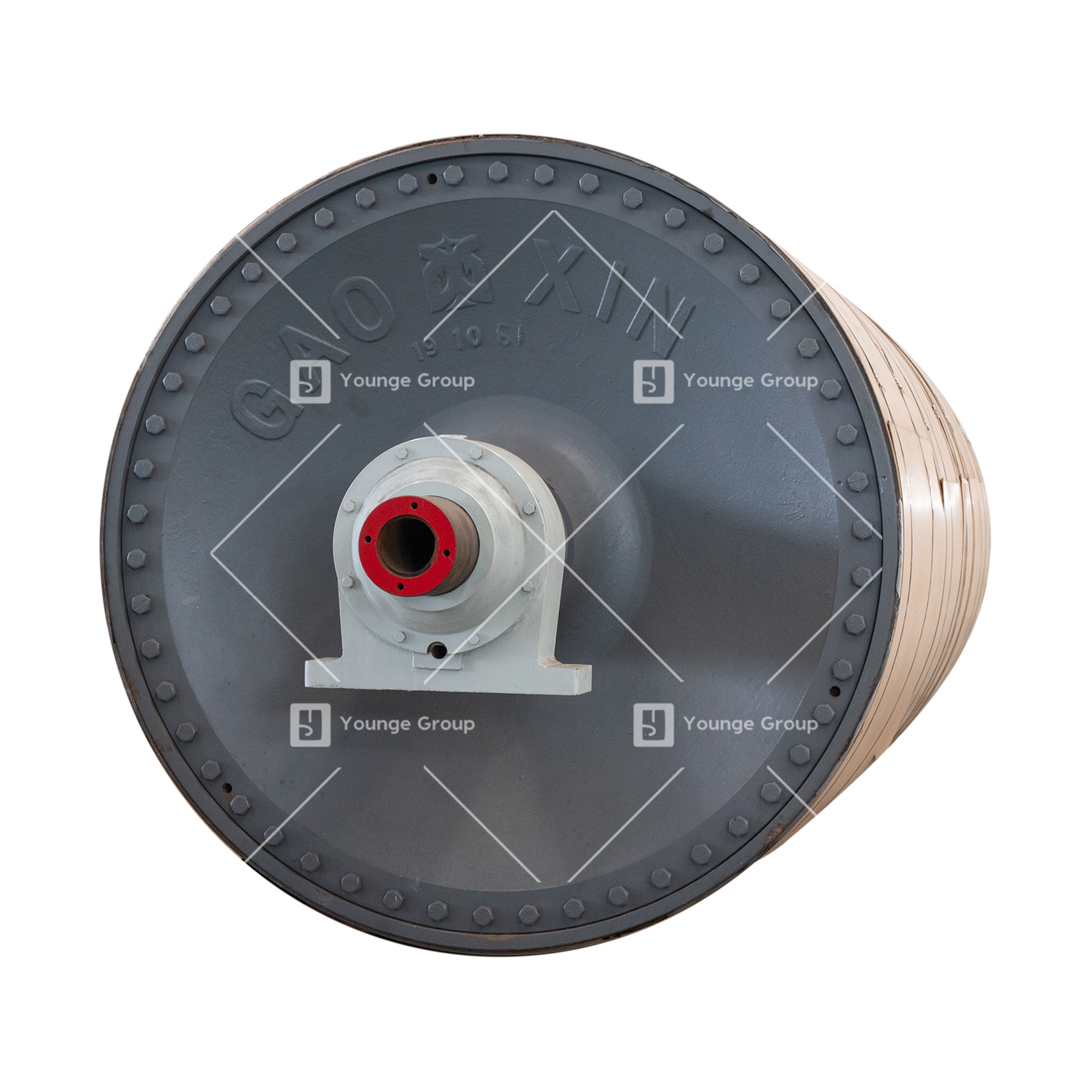
The drying cylinder is used to transfer the heat of heating media such as steam to the wet paper sheets during the production process to evaporate the moisture and obtain drying.
The cast iron drying cylinder for papermaking machine is a key component used for paper drying – Class I pressure vessel. The number of cast iron drying cylinders accounts for about 2/3 of the total number of pressure vessels in the papermaking industry. The materials used to make drying cylinders are generally HT200 and HT250. In terms of manufacturing quality, it is required that there should be no penetration and excessive sand holes. In order to increase the smoothness of the paper surface, the outer surface of the drying cylinder is required to be polished and the inner surface is polished to keep the thickness of the entire drying cylinder wall consistent to ensure the safety, balance and uniform heat transfer of the drying cylinder. The function of the drying cylinder is to dry the moisture in the paper sheet and finish the paper surface.
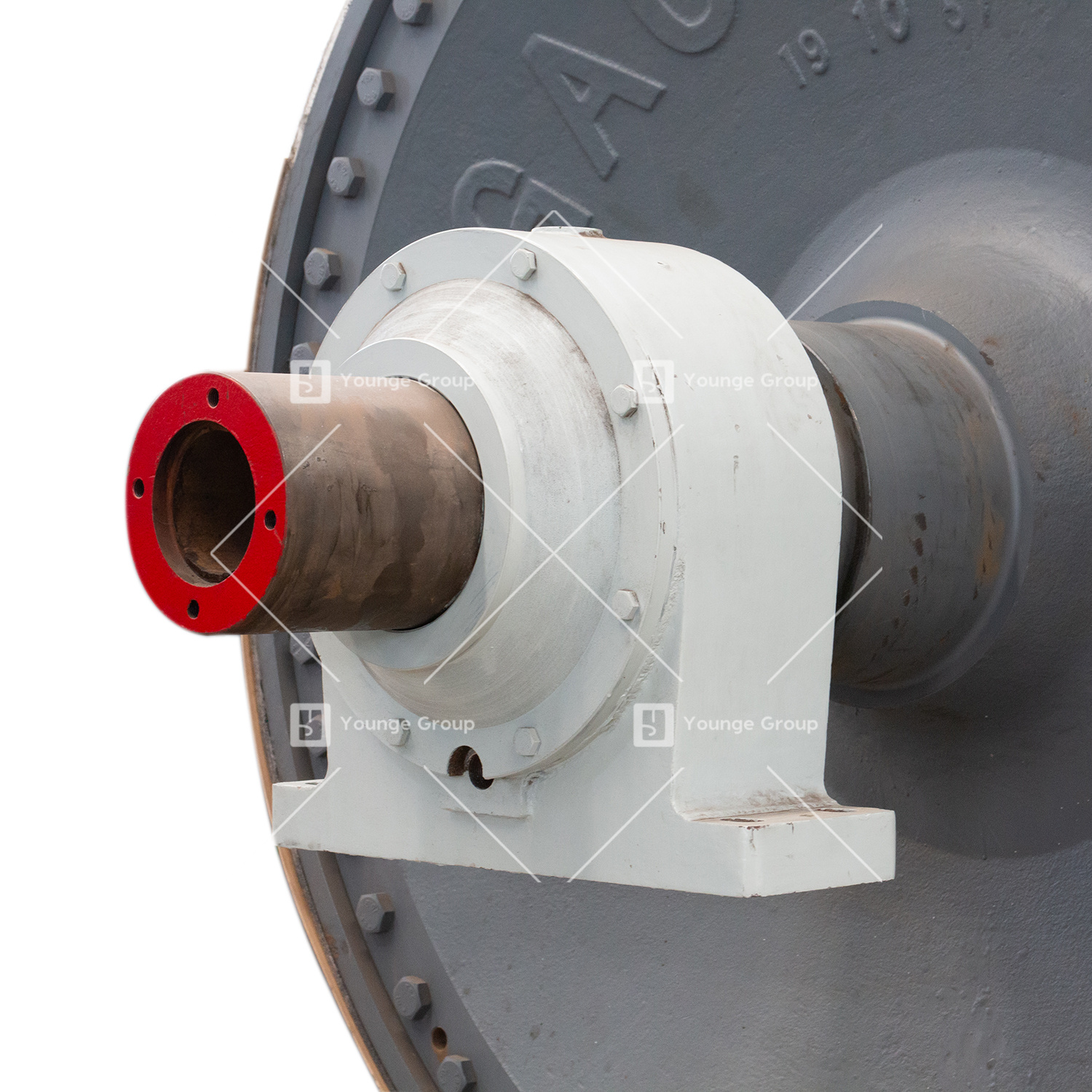
The main components of the drying cylinder include: roller shell, spoiler rod, siphon, end cover, manhole cover, bearing, shaft head, steam joint, etc.
The saturated steam introduced from the steam joint condenses inside the drying cylinder, and the heat released causes the temperature of the drying cylinder to rise, thereby heating the paper sheet wrapped on the surface of the roller shell. The heat is transferred to the paper during the contact between the paper and the surface of the drying cylinder.
After the steam releases heat and condenses, a large amount of condensed water is generated. The condensed water adheres to the inner surface of the drying cylinder due to the centrifugal force of the rotation of the drying cylinder. When the angular velocity is high, a water ring is formed, which hinders the transfer of heat to the surface of the drying cylinder. Therefore, a siphon is needed to discharge the condensed water in time. When the vehicle speed is low, no water ring will be formed, but condensed water will splash and accumulate in the drying cylinder.
1.Folding steam joint
As mentioned earlier, steam needs to be passed through the drying cylinder, and the condensed water inside needs to be discharged. But the drying cylinder is a rotating cylinder, so a special joint is needed to complete this task, namely the steam joint.
The introduction of steam and the discharge of condensed water are generally completed together by a rotary joint at one end of the drying cylinder, or steam can be introduced at one end and condensed water can be discharged at the other end.
Steam and condensed water are introduced and discharged at the same end. The journal at this end of the drying cylinder is hollow, thus providing a channel for steam and condensed water. After the steam enters the input end, it enters the drying cylinder from the opening of the conveying pipe, and the condensed water is sucked up by the siphon and discharged along the pipeline. This pipeline is inside the conveying pipe. Since the journal also needs to be equipped with bearings and other components, the temperature rise caused by the steam entering the journal will have an adverse effect. Therefore, an insulating sleeve is used to separate the heat of the steam in the conveying pipe from the journal as much as possible. The insulating sleeve is fixed on the hollow journal and rotates with the drying cylinder, while the fixed bracket, conveying pipe, etc. are stationary. The end of the insulating sleeve should be sealed with a carbon ring to prevent internal steam leakage.
2.Folding spoiler rod
The purpose of the spoiler rod is to destroy the condensed water ring formed in the high-speed rotating drying cylinder and generate more turbulence. The spoiler rod is installed in the horizontal direction of the inner surface of the drying cylinder. It rotates at the same speed as the drying cylinder, so it will move the water ring, generate turbulence, and facilitate heat conduction. The position of the spoiler rod is drawn in the drying cylinder structure diagram.
We will contact you within 1 working day, please pay attention to the email with the suffix “@jennypapermachine.com”.