

Alkaline cooking is divided into intermittent cooking and continuous cooking according to the operation.
Intermittent cooking
Cooking process
1.Loading and liquid feeding
Refers to loading plant fiber raw materials and cooking liquid into the digester, such as steaming balls. In this process, we should try our best to achieve “more, uniform, fast, and appropriate liquid temperature;”
- More means that the loading should be more, so as to increase the loading amount per unit volume of the digester;
- Uniform means that the liquid and the material pieces should be mixed evenly to ensure uniformity;
- Fast means that the loading and liquid feeding time should not be too long, especially for grass. If the contact time between the grass pieces loaded first and the grass pieces loaded later and the liquid is different, it will affect the uniformity of cooking
- Appropriate liquid temperature means that the liquid temperature of the liquid feeding should be appropriate. Too low will affect the loading amount, and too high will affect the uniformity of cooking.
2.Heating
After loading and liquid feeding, heating and small gas release begin.
For most grass raw materials, delignification can be basically completed and dispersed into pulp. When the temperature reaches a certain temperature or pressure, small gas release is required.
3.Small gas release
Its role is mainly reflected in the following three aspects:
- Exhaust the air and other gases in the digester to eliminate false pressure, which is conducive to temperature rise;
- When small gas release, spontaneous boiling can occur in the pot, reducing the temperature difference and concentration difference in different parts of the pot, which is conducive to the penetration and uniform cooking of the liquid;
- When pine wood raw materials are small gas release, in addition to removing air, turpentine and other volatile substances can also be discharged. Turpentine and other substances can be collected through small gas release;
Note: For grass raw materials, since the grass slices absorb the liquid faster during loading and liquid feeding, there is less air in the grass slices than in the wood chips, so when the grass raw materials are steamed and heated, small gas release or no small gas release is OK.
4.Insulation at the highest pressure or temperature
For different raw materials, different cooking processes are used, and the insulation time at the highest pressure or temperature is different.
5.Large steam release and material discharge
For the caustic soda method and the sulfate method, after the cooking is completed, the material can be discharged after large steam release. The most common method is spraying, that is, full-pressure spraying or reduced-pressure spraying.
Cooking Condition
Different raw materials and different evaporation methods have different delignification reaction mechanisms and carbohydrate reaction mechanisms.
The cooking process should be combined with the type of raw materials, the reaction mechanism of lignin and carbohydrates, which is conducive to the effective use of chemicals, energy and time, thereby ensuring the yield and strength of pulp.
1.Amount of alkali
The amount of alkali used will affect the delignification rate and degree of delignification, and will also affect the degree of carbohydrate degradation.
When other cooking conditions remain unchanged, increasing the amount of alkali will accelerate the delignification rate, increase the degree of delignification, and accelerate the degradation rate of carbohydrates, resulting in a decrease in pulp yield.
The amount of alkali used mainly depends on the type and quality of the raw materials and the quality requirements of pulping. At the end of cooking, there must be a certain amount of residual alkali to maintain the pH value of the cooking liquid not lower than 12.
When the pH value is lower than 12, the lignin dissolved in the cooking liquid will gradually deposit on the fiber;
When the pH is lower than 9, more lignin dissolved will deposit on the fiber, thus affecting the quality of the pulp.
2.Liquid ratio
When the amount of alkali is certain, reducing the liquid ratio will increase the concentration of the liquid, resulting in:
a. Accelerate delignification and shorten the cooking time;
b. Increase the degradation of carbohydrates and reduce the yield;
c. Reduce gas consumption;
d. If the liquid ratio is too small, the liquid and the flakes are not mixed evenly, the cooking is uneven, and the coarse slag rate will also increase
From an economic point of view, the liquid ratio should be reduced to reduce energy consumption while ensuring uniform cooking;
Generally, the liquid ratio of the steam ball is 1:2-3, and the liquid ratio of the vertical pot is 1:4-5;
3.Sulfurization degree
In the process of kraft pulping, the sulfidation degree of the liquid has a great influence on the delignification rate, the yield and quality of the pulp. Within a certain range, the increase of sulfidation degree can accelerate delignification, but beyond a certain range, the effect is not good, and may even lead to a decrease in the cooking rate.
When the alkali rate is certain, the appropriate increase in the degree of sulfidation can increase the yield of pulp. If it is too high, the sulfided lignin cannot be fully dissolved, which will lead to a decrease in pulp quality.
Generally speaking, wood raw materials with more β-aryl mystery bonds,
especially coniferous wood raw materials, are suitable for a higher degree of sulfidation, generally 25%-30%. Generally, in special cases where deep delignification is required, the degree of sulfidation can even be 40%;
The degree of sulfidation for cooking hardwood is 15%-25%;
The degree of sulfidation for grass requires a lower degree of sulfidation, generally 10%-20%.
4.Maximum cooking temperature, heating and insulation time
The maximum cooking temperature is very important. It is the key to ensure that the raw materials are separated into the required hardness pulp. The maximum cooking temperature used should not be too high or too low.
With the increase of cooking temperature and the extension of insulation time, although it is beneficial to remove lignin, it will also aggravate the degradation of carbohydrates.
The traditional maximum temperature for wood raw materials: 155-177 degrees Celsius;
The cooking temperature of coniferous wood is higher than that of hardwood;
Reed: 155-170 degrees;
Rice and wheat straw 145-160 degrees Celsius;
The length of the heating time depends on the nature of the raw materials, production conditions and the difficulty of the cooking liquid to penetrate.
5.The variety, nature and quality of the raw material fiber of the plant
Due to the differences in physical and chemical properties and preparation processes, different raw materials have different effects on their cooking, and the quality of the pulp produced will also vary greatly.
The factors related to the raw materials that affect the cooking quality include the variety, density, moisture, internal differences in the wood, storage of the wood, pre-impregnation of the wood chips, specifications of the wood chips and the degree of damage to the chips.
The thickness has the greatest impact on the size of the wood chips. Short and thin wood chips are easy to penetrate by the liquid, which is conducive to cooking. The pulp produced is of good quality and high yield, and the consumption of liquid can be reduced.
For waste wood raw materials, there are many varieties of grass fiber raw materials. For example, rice straw fiber has loose structure and low lignin content, which is generally easy to penetrate and cook.
In short, due to the difference in raw materials and control, the cooking conditions will also be different, especially the amount of alkali and cooking time.
Continuous cooking
Continuously complete the whole process of cooking, such as loading the pot, delivering liquid, heating, keeping warm and putting the pot.
The process conditions of continuous cooking are basically the same as those of intermittent cooking.
In comparison, the advantages are as follows:
- High degree of production automation and low labor intensity;
- High output per unit pot capacity and small footprint;
- Balanced consumption of resources and raw materials;
- High heat recovery rate, less air pollution, high pulping rate, and uniform and stable quality;
Disadvantages:
- Complex equipment structure and high maintenance cost;
- High power consumption;
- High precision requirements for equipment;
- Poor production flexibility;
Cooking technology with additives
By adding additives during the cooking process, the purpose of accelerating delignification and protecting carbohydrates can be achieved.
Additives can be divided into three categories according to their uses:
- Additives that can protect carbohydrates and increase cooking yield;
- Additives that accelerate delignification and thus shorten the cooking time;
- Additives that can both accelerate delignification and protect carbohydrates;
The main additives used in the actual production process:
- Alkali cooking technology with anthraquinone and its analogs
Anthraquinone protects carbohydrates and accelerates delignification.
The mechanism of action of anthraquinone as a cooking aid is as follows:
First, anthraquinone oxidizes the reducing end groups of carbohydrates, turning them into carboxyl groups to avoid the occurrence of peeling reactions. At the same time, anthraquinone itself is reduced to anthrahydroquinone.
In alkaline conditions, anthraquinone hydroquinone will ionize into anthrahydroquinone ions, and then exchange into anthrahydroquinone ketone ions to react with the lignin methylene quinone structure. After the reaction, the anthraquinone ketone ions will turn back into anthraquinone and continue to oxidize carbohydrates.
The result of such redox reactions can effectively promote the removal of lignin in the intercellular layer and the removal of residual lignin in the cell wall.
Adding a trace amount of anthraquinone (0.03%-0.05% of the raw material) during alkaline cooking can accelerate delignification, reduce alkali consumption, and increase pulping yield, but the effect on improving pulp strength is not very obvious.
As an aid, the most effective stage of anthraquinone is in the early stage of cooking.
Studies have shown that when the H factor is different, the effect of anthraquinone is also different. When the H factor is lower than 2000, anthraquinone has a significant effect on delignification, and the addition of anthraquinone can reduce the kappa value by 6 units. When the H factor reaches above 2500, anthraquinone has no obvious effect on delignification.
Since anthraquinone is insoluble in water and difficult to fully mix with the cooking liquid, in order to better exert its effectiveness in cooking, easily soluble or relatively soluble anthraquinone derivatives have been developed, mainly including: anthrahydroquinone, dihydroanthraquinone, tetrahydroanthraquinone, etc.
- Sulfate cooking technology with sodium polysulfide
This technology mainly uses the oxidation of sodium polysulfide to oxidize the terminal groups of tungsten to form various alkali-stable carbonic acid terminal groups, thereby stopping the peeling reaction and improving the cooking yield.
The oxidation of sodium polysulfide can only be fully exerted when the temperature is low. When the temperature exceeds 100 degrees Celsius, sodium polysulfide will decompose.
- Alkaline cooking technology with sodium sulfite addition
This technology can improve the pulp yield by adding a small amount of sodium sulfite during alkaline cooking. This is mainly because sodium sulfite can be used as an oxidant for the terminal groups of cellulose and hemicellulose aldehydes, thereby reducing the occurrence of peeling reactions.
In addition, surfactants can also be used as cooking aids during cooking.
It mainly utilizes its wetting, penetration and dispersion effects to promote the wetting of fiber raw materials by cooking liquid, accelerate the penetration and uniform diffusion of cooking chemicals, thereby enhancing the removal of lignin and resin by cooking liquid, and at the same time can also play a role in dispersing resin.
Other cooking techniques
Pre-hydrolysis sulfate cooking technology
This technology is mainly used to produce high-purity refined pulp, such as dissolving pulp, etc. It includes two steps: pre-hydrolysis and sulfate cooking. First, the raw materials are pre-hydrolyzed, and then sulfate cooking is performed.
There are three pre-hydrolysis methods:
- Acid pre-hydrolysis
Use inorganic acid as a pre-hydrolysis agent to treat the raw materials. Among them, sulfuric acid is more commonly used. The acid dosage is generally selected to be 0.3%-0.5%, and the pre-treatment temperature is controlled at 100-125 degrees Celsius; - Water pre-hydrolysis: The temperature is 140-180 degrees, and the hydrolysis time is 20-180 minutes;
- Steam pre-hydrolysis: high-temperature saturated steam is used as a pre-hydrolysis agent. This method has a small liquid ratio and a hydrolysis liquid;
The H+ concentration is large, and the hydrolysis reaction is rapid, generally only 10-30 is required to complete.
The main purpose of pre-hydrolysis is to achieve the following:
- Reduce the content of hemicellulose in the raw material through pre-hydrolysis, change its structure, and increase the α-cellulose content of the pulp;
- Improve the reaction ability during pulp chemical processing;
- Control the viscosity and polymerization degree of pulp;
The sulfate cooking after pre-hydrolysis is the same as the general sulfate cooking.
However, due to the condensation of lignin and the change of other material structures during the pre-hydrolysis process, the color of the semi-pulp after pre-hydrolysis will become darker. Therefore, in order to ensure the quality of the pulp, the amount of alkali used for cooking should be higher than that of general kraft cooking, and the maximum temperature and time should also be properly controlled.
Oxygen-alkali cooking technology
Advantages: less environmental pollution, elimination of waste pollution, no methyl mercaptan, etc.;
However, only a very small number of straw pulp mills currently use it.
Solvent cooking technology
Using organic solvents as cooking agents, plant fiber raw materials are treated at a certain temperature and pressure to dissolve the lignin in them and separate the fibers into pulp.
Types of solvents:
1. Alcohol solvents: methanol, etc.
2. Organic acid solvents: formic acid, acetic acid, etc.
3. Lipid solvents: ethyl acetate
4. Phenolic solvents: phenol
5. Composite organic solvents: methanol + acetic acid, etc.
6. Active organic solvents: dihexanolamine, etc.
Although solvent pulping is more common in laboratories, there are still some disadvantages in applying it to actual production:
1. The pulping process is relatively complicated and cannot be washed directly with water. Washing with water will cause the dissolved lignin to re-deposit on the fiber;
2. The chemicals used for pulping are highly volatile and must be strictly controlled during operation. No leakage is allowed;
3. It is difficult to pulp mixed wood raw materials, and the preparation process requires strict requirements;
Cooking equipment
Cooking equipment includes cookers and other auxiliary equipment.
Intermittent type:
1.Vertical cooking digester

It is divided into upper and lower pots, and the pot body is equipped with a liquid extraction filter belt for circulation of cooking liquid
The position of the liquid extraction filter belt is related to the type of cooking raw materials and the cooking method; for example:
For the cooking of wood pulp, the position of the liquid extraction filter belt is slightly lower than that of reed pulp, because the filtration performance of wood pulp is better than that of reed pulp.
2.Rotary spherical digester
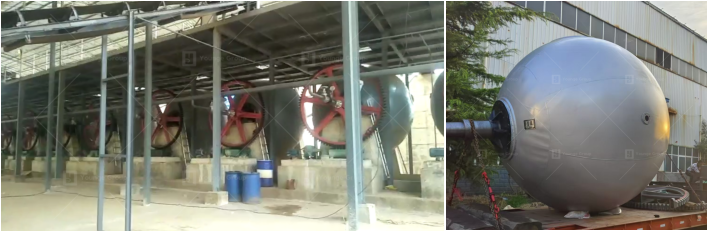
It is commonly used for cooking grass raw materials by caustic soda method, sulfate method, alkaline sodium sulfite method or neutral ammonium sulfite method.
Large-scale pulp mills use more cooking pots, and steaming balls are more suitable for small and medium-sized paper mills, especially for cooking grass raw materials.
Continuous cooking type:
1.Vertical continuous cooker
There are: liquid phase type or hydraulic type, vapor phase liquid phase type, high pressure pre-impregnation-liquid phase type (double tower).
The cooker mainly consists of several areas such as impregnation area, heating area, cooking area, high temperature diffusion washing area and cooling area. When cooking, the wood chips will pass through each area in turn to complete the whole process.
2.Horizontal tube continuous digester
Suitable for cooking grass raw materials and wood chips. Chemical pulp or semi-chemical pulp can be made by cooking methods such as alkali method and neutral sulfite method.
Features: It can be steam-phase high temperature rapid cooking.
Process:
Feeding-the raw material enters the double spiral pre-impregnation device, then squeezes into the plug tube, then enters the cooking tube, and finally sprays the pulp into the spray pot.